
Fascia and Longevity
Want to Age Better?
Start with Your Fascia
You’ve probably heard about the importance of strength, flexibility, and cardiovascular health when it comes to aging well, but there’s one piece most people are missing:
Fascial health.
Fascia plays a huge role in how we move, feel, heal, and age. It surrounds and connects every muscle, organ, bone, nerve, and blood vessel in your body, like a three-dimensional web that holds everything together.
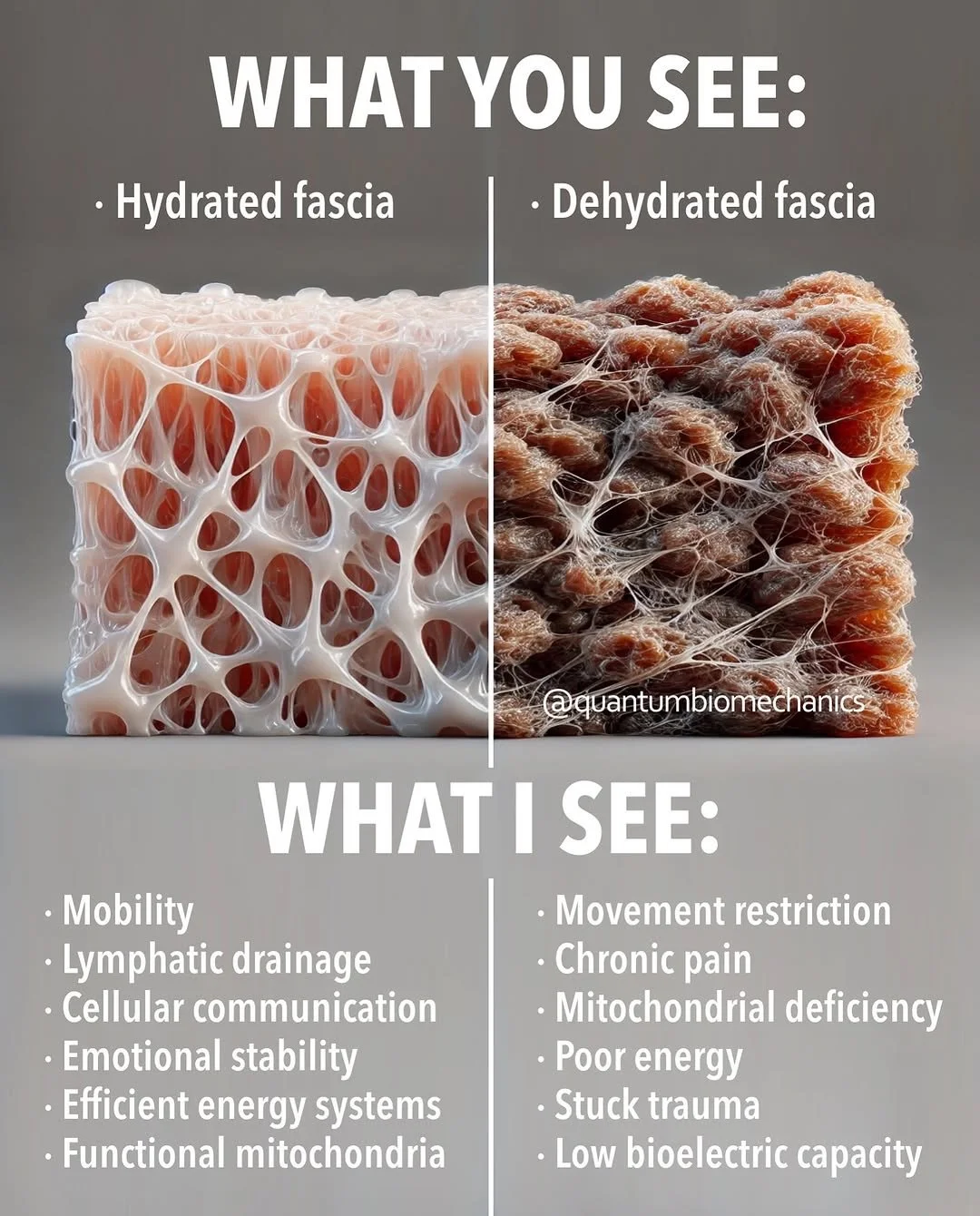
When your fascia is healthy (mobile, hydrated, and free) it glides and supports:
Better posture and alignment
Improved circulation and energy flow
Greater ease of movement
Fewer injuries and quicker recovery
A body that feels younger, more spacious, and alive
When fascia is asymmetrical or dehydrated, it becomes stiff, and can pull bones out of place, causing:
More aches and pains, such as knee pain, hip clicks, back tightness
Chronic inflammation
Loss of mobility or flexibility
Slower recovery from injury
Feeling “tight” or “compressed” in your body
A general sense of fatigue or heaviness
We've all experienced how we move less and sit more when we're in pain. And we see time and time again that our clients return to a more active lifestyle after working with us. That’s why we think of Myofascial Release (MFR) as more than just pain relief. It’s a long-term investment in your well-being — a form of structural self-care that helps you stay functional, resilient, and vibrant as the years go on.