

About Myofascial Release
Myofascial Release is a highly effective form of advanced manual therapy that helps reduce or eliminate pain and makes it easier to move. Many different techniques are incorporated into Myofascial Release treatments. Myofascial Release consistently:
Reduces or eliminates pain
Increases range and ease of movement
Balances tone and rejuvenates soft tissue
Increases overall flexibility
Fosters emotional evenness and intelligence
Enhances sense of Self
Proves to be more effective than massage therapy
Myofascial Release is critical for relieving chronic pain.
It feels like very slow, sustained, usually gentle compression combined with a specific method of stretching that optimizes your body’s structural alignment by balancing the tone and length of the myofascial system. Myofascial Release is highly customized and feels to many like a gentle, therapeutic rack, creating permanent change to your dense, shortened, painful-producing soft tissue. It is very different from massage therapy.
myo = muscle appears pink in the images below
fascia = a type of connective tissue glistens and appears clear and whitish in the images below
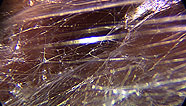
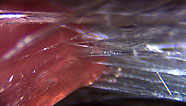

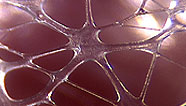
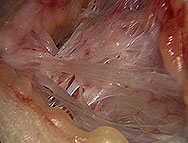
Images of living human fascia courtesy of French hand surgeon Dr. Jean-Claude Guimberteau.
Inflammation produces restricted myofascial tissue
Inflammatory responses from habitual poor posture, overuse, underuse, surgery, major trauma or many smaller injuries over time cause the web-like connective tissue to reinforce itself. It does this by becoming denser, adhered and often growing thicker through a process commonly known as fibrosis. These effects combine to form restricted fascial tissue that can deepen and spread throughout your body over time. Fascial restrictions transform the naturally wavy, wet and flexible fascia within these areas into something quite hard and stiff. It becomes dried out and leathery or ropey. Left to fester over time, fascial restrictions can become as hard as bone.
John F. Barnes’ Myofascial Release Approach® (MFR) works by applying gentle, sustained pressure into these restrictions. The key word is sustained. Unlike a quick massage stroke, the therapist holds pressure at the restricted area for an extended period of time. This is what makes the approach unique.
Here's why that matters: holding pressure long enough allows the tissue to slowly soften and shift from a more solid, stuck state back into a fluid, flexible one. As this happens, the body's own natural anti-inflammatory response is triggered, helping to reduce pain from the inside out.
Beyond the physical, our approach recognizes that the body holds onto emotional and psychological tension as well. The slow, mindful nature of this work creates a safe space for the body to let go of old holding patterns connected to past trauma or stress, allowing healing that goes deeper than symptom relief alone.
The result is a whole-body approach that doesn't just treat where it hurts, but works to address the root cause — offering lasting relief rather than temporary fixes.
Seemingly unrelated symptoms in areas well away from the restricted area relax and soften. This is possible and indeed common because fascia is a three-dimensional tissue spreading continuously throughout the body head to toe, front to back. When an area within this web of soft tissue binds down and hardens, it produces a drag-like effect throughout the entire system, easily compressing or pulling joints out of alignment, impinging nerves, compromising normal organ function, suffocating cells, or producing other symptoms above or below the restricted area.
Symptoms are usually the tip of the iceberg
All of the standardized tests, including X-Ray, MRI, CAT scan, etc fail to show fascial restrictions. Most forms of therapy seek to treat symptoms as the beginning and end of the problem without addressing their underlying cause in the fascial system. Of course quieting symptoms has value. But think about what happens when one hole is plugged in a compromised dam. Before long, the next area of weakness springs a leak. The same thing happens in the body. Not long after one symptom is brought under control a new one seems to show up. This explains why so many people complain about how much they hate their aging bodies. They feel their bodies have betrayed them as they wait in line at one specialist’s office and then the next for medications to control their symptoms, which are usually only part of the problem. It doesn’t need to be this way. Your body does have an amazing capacity to heal itself. By restoring freedom to the fascial system, your self-healing capacity is optimized. Myofascial Release gently and safely helps resolve even long-standing chronic conditions.